


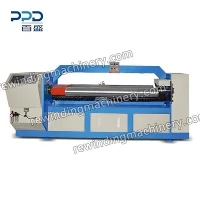

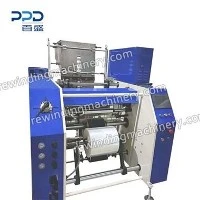

Hey there, let’s cut to the chase as we tackle one of the most common questions I get from new clients: Can our Business Form Press print on different sizes of paper? Short answer? Yeah, 100%—but there’s way more to it than a basic “yes.” I’m not here to give you that generic sales fluff that glosses over what actually works. I’m a Business Form Press supplier, I’ve fielded this exact question from small startup print shops and big warehouse operations alike, and today I’m breaking down how, why, and when sizing flexibility matters so much.
First, let’s get on the same page about what a Business Form Press actually is, because a lot of folks mix it up with a regular office printer or a standard offset press. For anyone who’s not deep in the print world, business form presses are specialized machines built specifically for printing things like invoices, checks, packing slips, purchase orders, and multi-part forms (think those triplicate forms you still see for contractor work, right?). They’re designed for high-volume, consistent, sometimes variable print jobs—way more reliable than your desktop printer for 10,000 part invoices.


Now, the big question: different paper sizes. When I first started in this business 12 years ago, this was non-negotiable. Back then, most Business Form Presses were fixed to a single trim size, usually 8.5x11 inches (letter size) or 11x17 inches (ledger size). That meant if a client needed a 5x7 invoice for their boutique or a smaller 4x6 packing slip, they had to either use a separate machine or compromise on size. But that’s not how we build these anymore. Modern machines like the ones we offer at /business-form-printing-machine/business-form-collator/business-form-press.html are built with modular sizing controls that make switching between paper sizes a breeze.
Wait, let’s make that specific. Let’s say you run a print shop that does both medical forms (which are often 8x10 for easy storage in filing cabinets) and smaller point-of-sale receipts that need to be 7x3. If your old press could only do 8.5x11, you’d be stuck buying two machines—more space, more maintenance, more upfront cost. With our press, though? Changing the paper size is as simple as adjusting a few guides on the feed tray and tweaking the print head alignment. No tools, no half-day setup, no wasted time. That’s the kind of practical flexibility that makes a real difference for small to mid-sized operations.
But before you go thinking “all Business Form Presses do this,” hold on. Not all machines are created equal. I’ve had clients come to me with broken older presses they thought could handle multiple sizes, only to find out their older model’s feed mechanism couldn’t adjust for smaller papers without jamming—jams kill productivity, I’ve seen enough jobs delayed because of that. The key here is the collator system, and that’s where our Computer Form Collator comes in (link here: /business-form-printing-machine/business-form-collator/computer-form-collator.html). Wait, let’s connect the dots here: collators aren’t just for stacking forms—they sync with the press to adjust feed tension for different paper weights and sizes. If you’re printing a thin 20lb bond paper for receipts and a heavy 28lb cardstock for checks, the collator makes sure the press feeds each size without slipping or jamming.
Let me give a real example, because I hate abstract talk. Last year, a client of ours that does custom forms for e-commerce brands came to me. They were handling packing slips (4x6, thin 20lb paper), return labels (8.5x11, mid-weight 24lb), and shipping manifests (11x17, heavy 28lb cardstock). Their old press could only do 8.5x11, so they were sending 11x17 jobs to an outside shop and losing money on shipping delays and extra per-job fees. We set them up with our Business Form Collator Machine (link: /business-form-printing-machine/business-form-collator/business-form-collator-machine.html) paired with our custom Business Form Press, and now they switch between all three sizes in under 10 minutes. Their downtime dropped by 60% in the first month, and they’ve since expanded their client list because they can offer more size options without outsourcing. That’s the stuff that actually matters, not just specs on a website.
Now, let’s talk about the limits—because I’m not gonna lie to you. No press can handle every size imaginable without modification, but modern ones cover a range that fits 99% of business form needs. Most of our presses handle from 3x5 (the size of a small receipt) up to 12x18 (for big inventory manifests). If you need something even bigger, we can add custom feed guides, but that’s a rare request. What’s more important than maximum size is the transition between sizes. If your feed mechanism is flimsy, switching from a tiny 4x6 to a big 11x17 will cause misalignment—lines of text will be off, barcodes won’t scan, and that’s a disaster for invoices or shipping labels. Our press uses adjustable servo-driven feed guides, so alignment stays consistent no matter the size.
Another thing people don’t think about: paper type goes hand-in-hand with size. If you’re printing a smaller size on thicker paper, the collator has to adjust not just the size guides but the tension on the rollers. Too much tension, and thin paper tears; too little, and thick paper won’t feed. Our Computer Form Collator automates that adjustment based on the paper specs you input, so you don’t have a tech messing with dials for an hour. That’s a huge win for operations that run multiple jobs a day with different sizes and paper types.
Wait, let’s address a common myth I hear: “If a press can do different sizes, it must be lower quality.” No way. Back when presses were fixed-size, that was sometimes true—they were built for one job, so cutting costs on quality was easier. But modern modular presses use the same high-quality print heads and roller systems as fixed-size models. The only difference is the adjustable components. I’ve got clients that use our press for checks, which need ultra-precise alignment to comply with banking standards, and they run checks in 8.5x11 and 5x7 sizes with zero issues. The quality stays consistent across every size.
Now, when is size flexibility NOT the right call? If you’re a very small business that only prints one type of form, like just 8.5x11 invoices, then a basic fixed-size Business Form Press will work fine, and it’ll cost less. But if you’re scaling, or if you take on clients with varied form needs, flexibility isn’t a “nice-to-have”—it’s a necessity. I see too many small print shops buy a cheap fixed press because it’s cheaper upfront, then have to upgrade in a year because they lost a big client who needed a different size. That’s a waste of money in the long run.
Let’s circle back to that client I mentioned earlier. They started with a fixed press, spent $1,500 on outsourcing 11x17 jobs every month, then upgraded to our press and collator for $8,000. In 5 months, they paid off the upgrade with the money they saved on outsourcing. That’s a real ROI story, not just sales talk. The key was choosing a press that wasn’t just flexible in size, but flexible enough to pair with our collator system to handle different paper weights without jams.
If you’re here because you’re researching Business Form Presses and wondering about size compatibility, here’s my advice: don’t just ask “can it do different sizes?” Ask about the size range it handles, how long it takes to switch between sizes, if it works with a collator for different paper types, and if it maintains print quality across all sizes. Any reputable supplier should be able to walk you through that, not just give you a vague “yes.”
At the end of the day, business needs change. A brand that started doing only local orders might expand to national, which means they need different form sizes for shipping. A small shop that works with local cafes might start taking on medical forms later. Your press should grow with you, not hold you back. That’s exactly what our Business Form Press is built for.
If you’re ready to stop limiting your form jobs to one size and start taking on more clients with different needs, I’d love to chat. We can walk through your specific use case, show you how our sizing system works, and answer any other questions you have—no hard sell, just real advice from someone who’s been in this industry for years. We’ve worked with everyone from 1-person print shops to large distribution centers, and we can find a setup that fits your needs and your budget.
References:
- Print Services & Association. (2022). “Modular Press Technology for Commercial Printing Applications.”
- Graphic Arts Technical Foundation. (2021). “Paper Size Compatibility in High-Volume Business Form Printing.”
- International Association of Commercial Collectors. (2023). “Form Printing Equipment Specifications for Variable Size Requirements.”