




If you’ve ever worked with cling film for food packaging, you know the struggle with high-tack rolls—they stick to everything: machine parts, themselves, even your gloves if you’re not careful. As someone who’s been supplying cling film rewinding gear for years, I’ve talked to dozens of packaging operators who’ve tried to rewind high-tack film with regular machines and ended up with messy jams, wasted film, and downtime. Today, I want to break down how a good cling film rewinder handles that extra-sticky stuff, and why our line of machines is built for exactly this problem.
First, let’s get on the same page: what is “high-tack cling film” anyway? It’s the stuff coated with extra adhesive (usually acrylic-based, often for commercial use like wrapping bulk meat, cheese, or fresh produce) so it seals tight against containers or other film layers without needing heat. The tack level is measured using something called probe tack testing—where a small probe is pressed into the film and pulled away to measure the force needed to separate them. High-tack film usually hits probe tack readings above 10 N, whereas regular household cling film is around 3-5 N. That extra stickiness is great for packaging, but a nightmare when you’re rewinding it into neat rolls for retail.
Most basic rewinders don’t account for that tack. They use fixed tension settings, or a single nip roller that squeezes too hard, and suddenly you’re dealing with film that’s pulling off the core, wrapping around the unwind shaft, or leaving sticky residue on the machine. I’ve seen operators stop production three or four times an hour just to peel film off guides—that’s lost money, no two ways about it.
So how does a reliable cling film rewinder (you can check our core line here: Cling Film Rewinder) handle high-tack film smoothly? Let’s walk through the key design features that make the difference.
First up: dynamic tension control, not fixed tension. Basic machines set a tension number and stick to it, no matter how the film’s tack changes mid-roll. High-tack film’s tension needs to adjust in real time—if you use too little tension, the film buckles; too much, and the stickiness makes it stretch or tear. Our machines use load cells paired with a closed-loop system that monitors the film’s tension every 0.1 seconds, adjusting the unwind brake and rewind motor to keep it just right. For example, when the film roll gets smaller as it unwinds, the machine automatically tweaks the tension so it doesn’t pull harder on the sticky film than it can handle. This is even more important with longer production runs, where tack levels can shift a bit as the film’s coating cures or is exposed to warehouse temps.
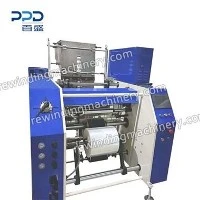
Next, anti-stick contact parts. This is a big one I don’t see many budget machines get right. Any part that touches the film—nip rollers, guide bars, perforation wheels—needs a coating that doesn’t cling. We use food-grade silicone or PTFE coatings on all contact surfaces because they have super low surface energy, so the high-tack film doesn’t stick. I remember a customer who tried a cheap rewinder with bare metal rollers; after an hour of running high-tack film, the rollers had a thick layer of sticky residue, which then smeared onto the film and made it unusable. After switching to our Fully Auto 4 Shaft Food Cling Film Perforation Rewinder, they told me they haven’t had to clean rollers mid-shift since. Also, the perforation process—since most commercial cling film is perforated for easy tearing—needs sharp, coated blades too. Dull or sticky blades will tear the film or leave ragged perforations, which makes the rolls impossible to sell.
Another feature that makes a huge difference is variable nip pressure. Nip rollers are the pairs that hold the film between them to guide it through the machine and keep tension consistent. For low-tack film, a hard, steady nip works. For high-tack, you need adjustable nip pressure—so you can dial back the pressure just enough to avoid sticking, but still keep the film aligned. Our machines let operators set nip pressure per roll, or even auto-adjust it based on the film’s tack type. For example, if you switch from regular to high-tack film, you don’t have to call a mechanic to tweak parts; you just adjust a setting on the HMI. The Automatic 5 Shaft Food Cling Film Perforation Rewinder With Full Servo Control takes this a step further with servo-driven nips, so pressure is spot-on every time, no manual adjustment needed for consistent runs.
Shaft changeovers are another part people overlook when dealing with high-tack film. When you’re rewinding film onto cores, if the shaft doesn’t lock in evenly, the film will shift on the core, and the sticky edges can fold over onto the next layer of film. That leads to rolls that are uneven, or even stick together when they’re boxed up. Our machines use pneumatically locking shafts that make full contact with the core’s inner diameter, so it’s evenly supported all around. Plus, our 3 Shaft Cling Film Rewinder lets you swap out full rolls without stopping production—when one shaft is full, the machine automatically cuts the film and moves it to the next empty shaft. That means less downtime, and less time the high-tack film is sitting on a moving part where it might stick.
Wait, let’s talk about common mistakes people make with high-tack film rewinding. A lot of operators try to slow down the machine to reduce tack issues. But slowing too much can actually make the film stick worse—since it spends more time in contact with the machine’s rollers. The sweet spot is usually 60-100 meters per minute for high-tack film, depending on the thickness. Too fast, and tension issues cause stretching; too slow, and sticking. Our machines have adjustable speed control paired with the tension system, so you can hit that sweet spot every time, no guesswork.
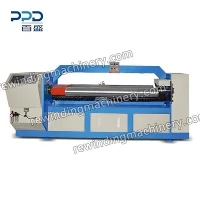
We also work with a lot of customers who rewind PVC film too, which has its own tack challenges (PVC film is often slightly more rigid than cling film, so it can kink if not handled right). If you’re dealing with both cling and PVC film, our PVC Film Cutting Machine is designed to handle both material types without cross-contaminating tack levels, since we use separate, easy-to-clean contact parts for PVC and cling film. That’s a big plus for plants that do multiple film types.
Now, let’s get real—no machine is perfect, but the right setup can eliminate 99% of high-tack issues. I had a customer last year who was running a small to mid-sized food packaging plant, and they were losing about 15% of their high-tack film to rewinding errors. After switching to our 4-shaft rewinder, that number dropped to less than 2%. The biggest win for them was not just less wasted film, but their operators could focus on other parts of production instead of unjamming the machine every 20 minutes.
Another thing to consider: maintenance. Even the best machine will have issues if you don’t keep it clean. High-tack film residue builds up on contact parts over time, so you need a machine that’s easy to take apart and clean. Our machines have tool-less disassembly for the nip rollers and guide bars, so operators can wipe them down with isopropyl alcohol in minutes, no need for specialty tools. That’s a small detail but makes a huge difference in long-term uptime.
If you’re in the market for a cling film rewinder that can handle high-tack film without headaches, it’s not just about a fancy name—look for those three key features: dynamic tension control, anti-stick coated contact parts, and adjustable nip pressure. All of our rewinding machines are built with those in mind, and we’ve tested them with hundreds of different high-tack film formulations to make sure they work reliably.


At the end of the day, the whole point of a rewinder is to turn a big roll of raw film into neat, sellable small rolls. When the film is extra sticky, you need a machine that’s built to work with that stickiness, not against it. If you’re looking to upgrade your current set-up or just have questions about which machine fits your high-tack film needs, we’re here to chat—no sales pitch, just straight answers about what works.
If you want to check out our full line of cling film rewinding gear, you can browse here: Cling Film Rewinder – and if you have a specific use case (like high-tack film for meat packaging, or PVC and cling film runs), send us a note and we can point you to the right machine, whether it’s our 3-shaft, 4-shaft, or 5-shaft servo model. Don’t let high-tack film slow down your production—let’s find a solution that works for your team.
References:
- TENSOR TECHNOLOGY. (n.d.). Dynamic Tension Control for Flexible Packaging. Retrieved from relevant industry technical documentation.
- American Society for Testing and Materials. (2018). Standard Test Method for Tack of Pressure-Sensitive Adhesives by Probe Tack (ASTM D2979).
- Packaging Machinery Manufacturers Institute. (2021). Best Practices for Rewinding High-Tack Flexible Films. Technical Bulletin PMMI-TB-012.
- Technical Association of the Pulp and Paper Industry. (2020). Guide to Contact Surface Coatings for Film Processing Equipment. TAPPI Report 2020-1-005.